
More than 35 years ago, I received a request to call a young woman who had just read the psychoeducational report I had written following her assessment. When I dialed her number, she answered in tears and asked a question I have never forgotten:
“Is this me? Is this all I am?”
I had diagnosed her with ADHD, reported and interpreted her IQ scores, and documented her difficulties with written language. Although I briefly mentioned several cognitive strengths, the report was primarily focused on identifying what was “wrong” with her. She had sought an evaluation to determine whether she qualified for workplace accommodations and what supports might be helpful. Instead, my carefully written report left her feeling diminished and defined by her challenges.
Even today, most neuropsychological reports follow a similar pattern. They focus heavily on deficits and difficulties, with strengths receiving only passing attention. We continue to operate largely within a medical model that emphasizes diagnosing problems and prescribing treatment. Implicit in this model is the assumption that there is a “normal” or ideal state of functioning against which all other ways of being are measured—and often found lacking.
But what exactly is a deficit?
A deficit is an inability to perform a task that is expected and valued within a particular cultural context. Five hundred years ago, the concept of dyslexia would have been meaningless. Literacy was expected only of a privileged few, primarily clergy and scholars. Because reading was not a societal expectation for most people, there was no basis for labeling someone dyslexic.
Even today, dyslexia is deeply influenced by the language being read. In Italy, for example, where the language is highly phonetic—if you can say it, you can generally spell it—dyslexia is far less common than in English. A person may struggle significantly to read one language and yet be highly fluent in another.
I have spent my life immersed in words, reading and writing constantly. Yet because my visual attention and visual memory are relatively weak, I have often wondered whether I would have been considered highly dyslexic had I grown up learning a more symbol-based language such as Chinese or Japanese. My visual memory limitations certainly contribute to my lifelong struggles with English spelling, a language filled with exceptions to phonetic rules.
In other words, many of our “disabilities” are culturally defined. A difference becomes a disability only when it interferes with tasks that a particular environment expects and requires.
Today, our world is changing at an unprecedented pace. We may soon begin identifying and measuring a new form of learning disability: digital disability. My own digital skills might place me at a third-grade level, while many adolescents navigate digital environments with a fluency that some people over fifty may never fully attain.
These examples remind us that abilities and disabilities are not fixed truths. They emerge from the interaction between individuals and the environments in which they live.
It is time to move beyond a medical model focused primarily on disease and disability and toward an appreciation of the uniqueness of each person we have the privilege to assess. Our goal should be to help people live more authentic, satisfying, and meaningful lives.
I am often reminded of the Rodgers and Hammerstein song Getting to Know You:
“Getting to know you, getting to know all about you, and all the beautiful and new things I’m learning about you day by day.”
That spirit captures what assessment should be about.
Who is this person?
How does this brain work?
What environments allow this individual to function, contribute, and thrive?
A difference is not the same thing as a deficit. A difference becomes a disability when the demands of the environment exceed the individual’s available adaptations, supports, and resources.
A neurodiversity-affirming assessment seeks to identify the conditions under which a person can flourish rather than simply documenting how they struggle in environments that may not fit them. The focus shifts from asking, “What is wrong with this person?” to asking, “What is true of this person?”
This perspective shapes all of ILAT’s ADHD training programs. Rather than merely counting symptoms, we emphasize understanding the whole person behind the diagnosis. Our goal is to appreciate the unique complexity, strengths, challenges, motivations, and experiences of the individual sitting before us.
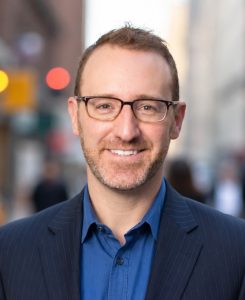 In that spirit, we are delighted to welcome A. Jordan Wright, PhD, ABPA, ABPP to the ILAT faculty. Dr. Wright will present at the ILAT Global Summit, October 29–30, where he will teach an approach to psychological assessment grounded in neurodiversity affirmation rather than a traditional deficit-based medical model. His work shifts the focus from changing people to creating environments in which diverse minds can thrive.
Dr. Wright serves as the director of the PhD Program in Clinical/Counseling Psychology at NYU, where he teaches and supervises psychological testing and assessment. He is also the author of Handbook of Psychological Assessment (2016), one of the most widely used textbooks in the field, among other books and many peer-reviewed articles.